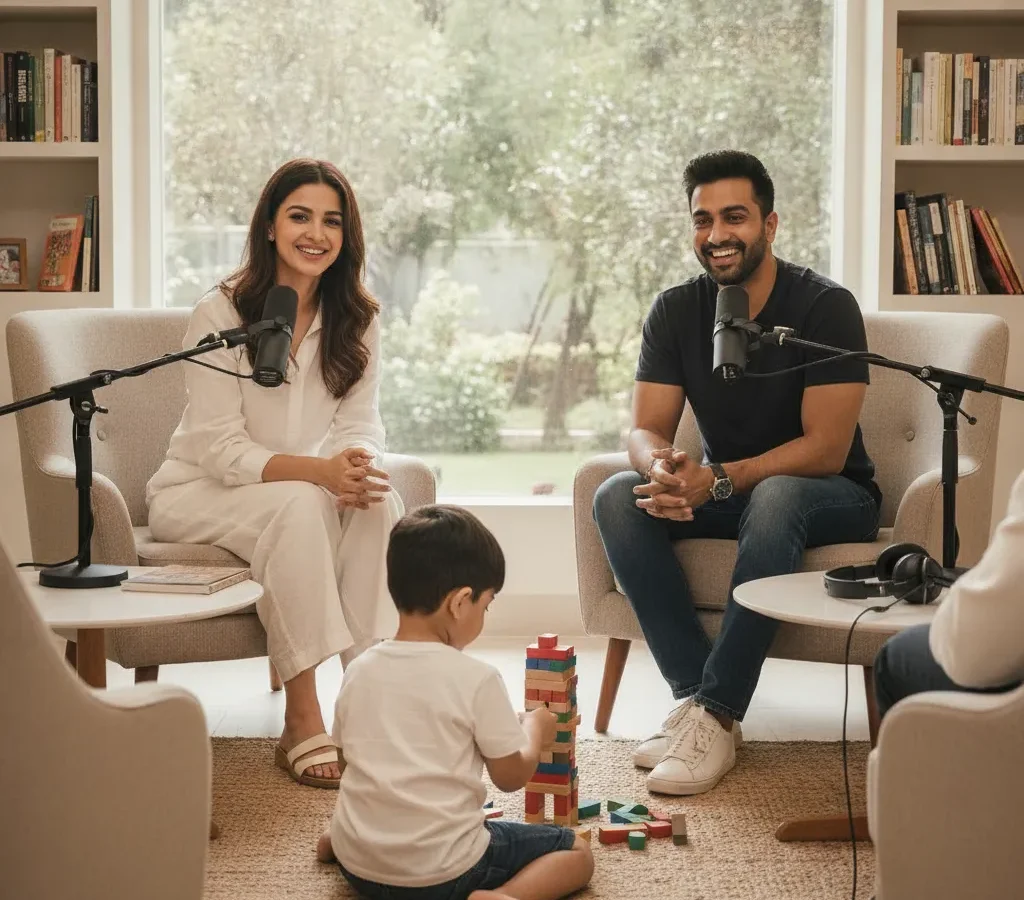
Bollywood actress Amrita Rao and her husband, radio jockey RJ Anmol, are opening up about the unconventional path they took in raising their son, Veer. In a recent appearance on the ThinkRight podcast with Rajan Navani, Rao revealed that she and Anmol made the conscious decision to keep their son entirely free of televisions and digital gadgets for the first five years of his life. This commitment began even before Veer was born, as Rao shared that she set aside her own mobile phone for the duration of her pregnancy to foster a deeper connection.
The couple’s determination to avoid screens was inspired by a relative in the United States whose children flourished under similar restrictions. To fill the void left by digital entertainment, Rao and Anmol focused on high engagement and auditory stimulation. They replaced videos with audio stories and nursery rhymes in both Hindi and English, believing that focusing on listening helped expand Veer’s vocabulary more effectively than passive screen time ever could. Without a nanny to rely on, the pair embraced parenting as a shared responsibility, dedicating their own time and attention to ensure their son remained occupied through direct interaction.
Maintaining this lifestyle was not without its hurdles. Rao admitted that getting extended family members to align with their strict no-screen policy was initially challenging. Similarly, they faced difficulties enforcing dietary choices, opting for satvik food over processed snacks and chocolates. These boundaries occasionally led to awkward social moments at parties or shops, though Anmol noted that arriving at a consensus between two parents often requires patience and compromise when both believe their specific method is best for the child.
Reflecting on her journey into motherhood, Rao touched upon the profound impact of global events like the pandemic on her perspective regarding parental responsibility. She emphasized the importance of mothers maintaining their individual identities and pursuing professional fulfillment rather than conforming to external definitions of success. While acknowledging that their approach is a personal choice tailored specifically to their family dynamic rather than a universal rule, Rao expressed that removing distractions allowed them to truly invest in their son’s early development.