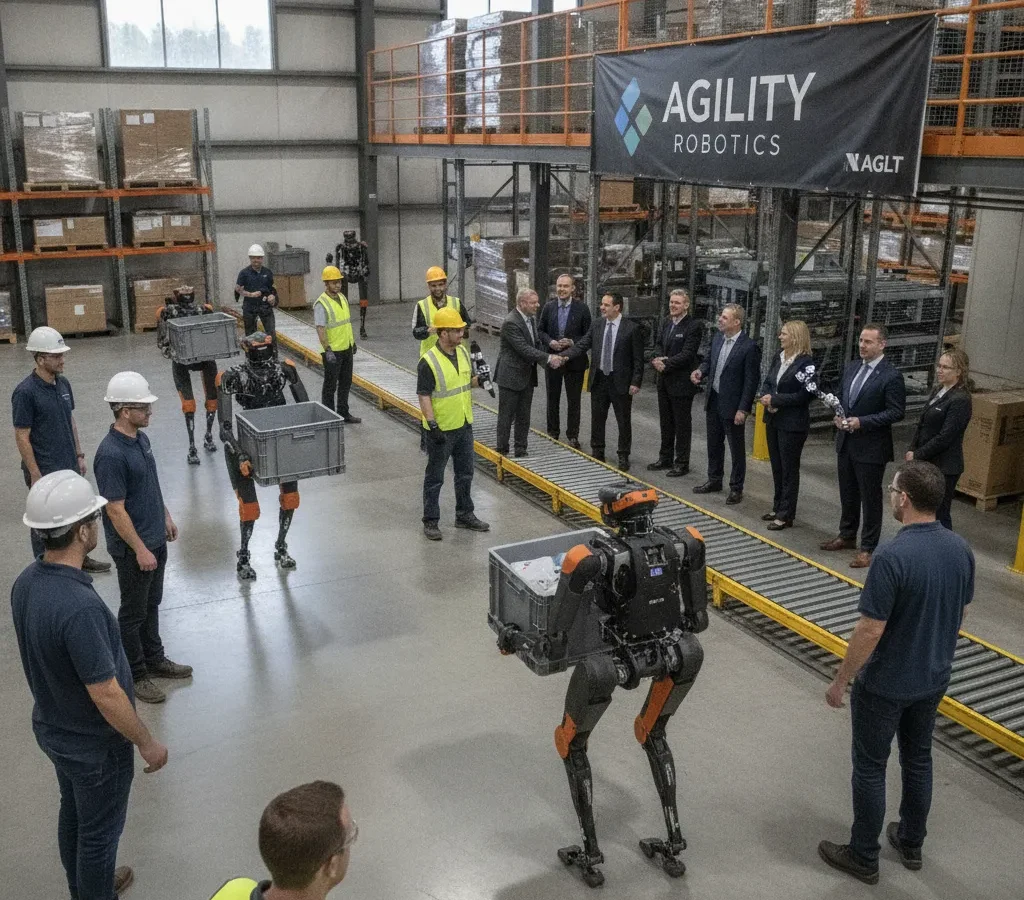
Wall Street is about to get its first real look at the financial plumbing behind the humanoid robot craze. Agility Robotics, an Oregon based startup specializing in two legged machines designed for warehouse labor, is set to begin trading on the Nasdaq this Thursday under the ticker AGLT. The move marks a historic milestone for the industry, though early disclosures suggest that turning science fiction into a sustainable business model remains a steep climb.
While the prospect of bipedal robots sorting goods for giants like Amazon and Toyota captures the imagination, the balance sheet tells a more grounded story. Last year, Agility reported a staggering net loss of over 138 million dollars against a meager 1.8 million dollars in revenue. Much of that income came from a handful of units sold to one of its own investors, highlighting the immense gap between technical deployment and actual profitability. Despite these numbers, CEO Peggy Johnson believes being first to market allows her company to define the benchmarks for what customers truly need from a humanoid worker.
The path to the public market was paved through a merger with Churchill Capital Corp XI, a special purpose acquisition company led by veteran financier Michael Klein. This deal values Agility at roughly 2.5 billion dollars, a figure that reveals a curious paradox in current investor sentiment. Privately held competitors like Figure AI command valuations in the tens of billions despite having fewer active deployments. It appears that while private venture capitalists are pricing in a futuristic dream, public markets may be more skeptical of companies actually shipping hardware today.
Looking forward, Agility is pinning its hopes on Digit 5, a newer iteration designed to work alongside humans without restrictive safety barriers. The company claims it has over 300 million dollars in potential orders from a single client for 1,000 robots, provided they can hit their delivery targets by late 2027. With recent U.S. government restrictions tightening on foreign made advanced robotics—particularly those coming from China—Agility finds itself positioned as a domestic champion in an increasingly geopolitical race for automated labor.