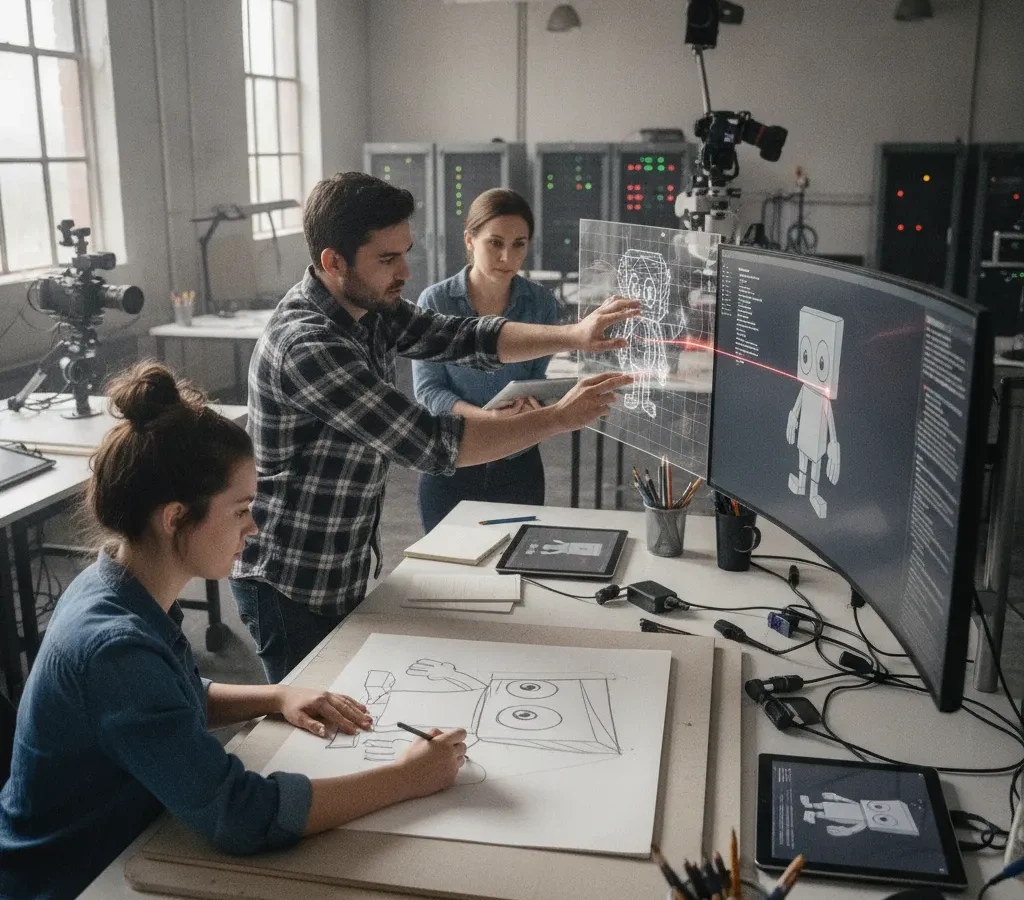
The intersection of traditional art and cutting edge technology has found an unlikely meeting ground in the world of animation. Engineers are now turning toward stylized cartoons to refine how artificial intelligence interprets visual information, moving away from a total reliance on photorealistic imagery. By using simplified lines and exaggerated features, developers can isolate specific variables that often confuse AI systems when they encounter the messy unpredictability of real world photography.
This shift represents a strategic pivot in machine learning known as synthetic data generation. When an AI learns from a cartoon, it is essentially studying a curated version of reality where edges are clear and objects are distinct. This allows the model to master basic spatial awareness and object recognition without being distracted by complex lighting or textural noise. Once the system understands these foundational concepts through illustration, it can apply those lessons to actual images with far greater accuracy.
Industry experts suggest that this method could drastically speed up the training process for autonomous vehicles and medical imaging tools. Rather than spending thousands of hours labeling millions of random photographs, researchers can create precise animated scenarios to test how an AI reacts to rare or dangerous situations. It turns out that some of the most sophisticated leaps in computer science are currently being powered by something as simple as a digital sketchpad.