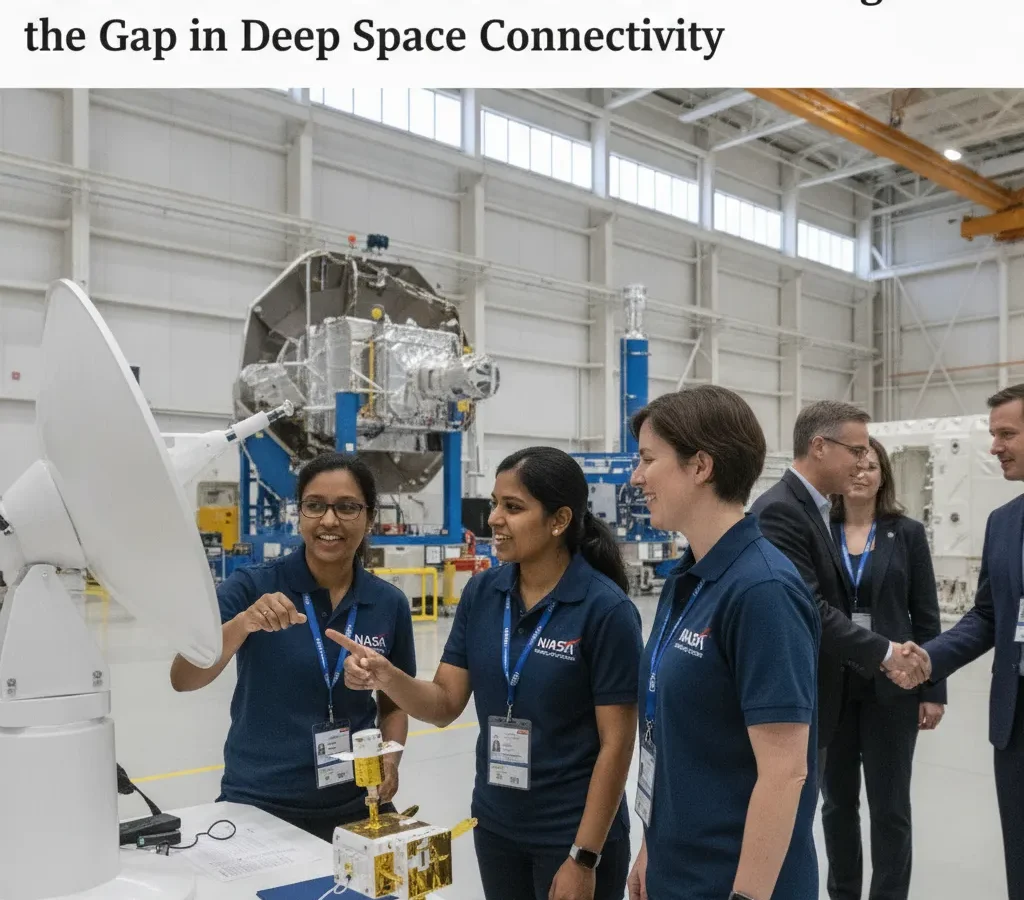
NASA is shifting its approach to how it talks to its satellites, moving away from owning its own massive relay networks and toward a partnership model with the private sector. On Wednesday, the agency announced it has tapped three industry leaders—Viasat, Global Enterprise Solutions, and Astranis Space Technologies—to build out specialized Ka-band satellite relay capabilities. This move marks a significant step in the gradual retirement of the legacy Tracking and Data Relay Satellite fleet, signaling a new era where NASA acts more like a customer in a competitive commercial marketplace than a sole provider of infrastructure.
The primary goal of these contracts is to ensure that current missions already orbiting Earth don’t go silent during this transition. Because many active spacecraft were built with specific hardware that cannot be updated while in vacuum, NASA needs seamless bridge technology that works with existing onboard systems. By developing these end-to-end solutions involving everything from ground stations to launch logistics, the agency can maintain critical data streams without needing to physically modify expensive equipment floating thousands of miles above us.
Financial stakes for the project are high, reflecting the complexity of space communications. Viasat leads the group with a potential contract value reaching over four hundred sixty million dollars, followed by Global Enterprise Solutions at roughly three hundred forty million and Astranis at two hundred sixty-four million. These fixed-price agreements start now and run through early 2027 for initial concepts, but they contain options that could extend development and flight demonstrations through 2029.
This initiative falls under the broader umbrella of the Space Communications and Navigation program’s efforts to modernize exploration tech. As NASA looks toward deeper reaches of our solar system, relying on agile commercial providers allows them to scale their communication needs more efficiently. For now, the focus remains on sustainability and continuity, making sure today’s scientific discoveries aren’t lost simply because the network they rely on has grown obsolete.