One long read for a slow Sunday. In a few short years, AI went from predicting the shape of proteins to proposing brand new ones. This week: what actually changed, why it earned a Nobel Prize, and why the bottleneck has quietly moved from the computer to the lab bench.
Why shape is everything
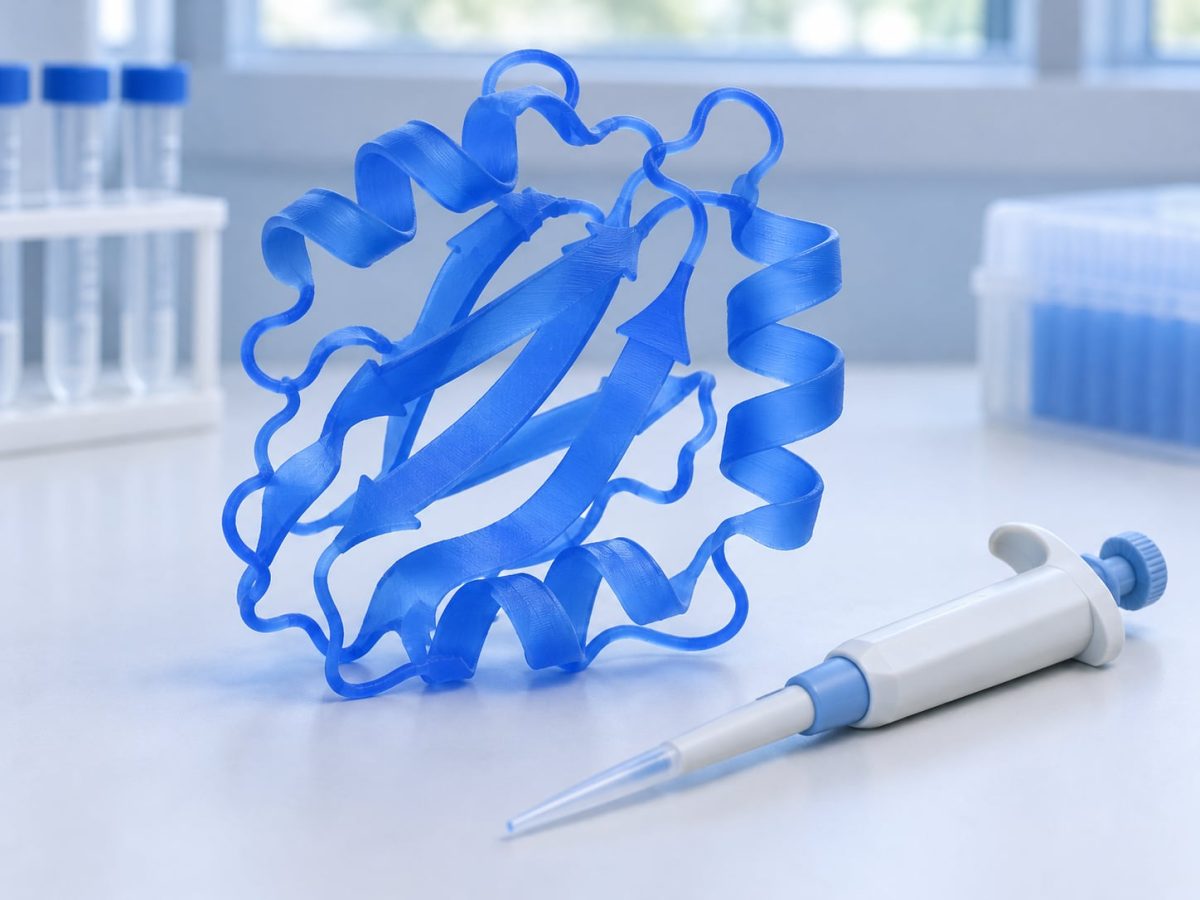
Proteins do most of the work in living things. They carry oxygen, read DNA, fight infections and build tissue. Each is a chain of amino acids, and the chain folds itself into a precise 3D shape. That shape largely determines what the protein can do, the way the shape of a key determines which lock it opens.
Reading the chain has been easy for a long time. Predicting how it folds was not. A protein has a mind-boggling number of possible shapes, and working out the true one in the lab could take years of painstaking work. Biologists called this the protein folding problem, and it sat open for about 50 years.
The moment it cracked
In 2020, DeepMind’s AlphaFold2 stunned the field by predicting structures with accuracy that often rivaled lab measurements. The system, published in Nature in 2021, learned from the structures scientists had already solved and from patterns in how related proteins evolve.
The result was a change in what a biologist’s ordinary day looks like. According to the Royal Swedish Academy of Sciences, the model was used to predict the structure of virtually all of the 200 million proteins researchers have identified. A question that once meant a PhD project can now often begin with a lookup.
In 2024, the Nobel Prize in Chemistry recognized this work, with one half going to David Baker for computational protein design and the other half shared by Demis Hassabis and John Jumper for protein structure prediction. Notice the pairing. Prediction reads nature’s designs. Design writes new ones.
Running the problem backward
Structure prediction asks: given this sequence, what shape will it take? Design flips the question: given the job I want done, what shape would do it, and what sequence would fold into that shape?
Baker’s lab had worked on this for decades, and AI has made it dramatically faster. A common recipe today has three steps, and each is its own model.
- Dream up a shape. Tools like RFdiffusion, described in Nature in 2023, work like image generators. Instead of turning noise into a picture, they turn noise into a protein backbone that fits a goal, such as gripping a chosen target.
- Find a sequence. A second model, such as ProteinMPNN, proposes amino acid sequences likely to fold into that backbone.
- Check the work. A structure predictor then estimates whether that sequence really folds as intended, so weak ideas get thrown out before anyone touches a pipette.
The output is a shortlist of candidates that have never existed in nature. That sentence is still a little wild to type.
What this could be good for
Researchers are chasing several kinds of designed proteins. Binders can attach to a specific target, which matters for medicines and diagnostics. Enzymes can speed up a chemical reaction, which could help with manufacturing or breaking down waste. Other designs aim to assemble into tiny structures, for example to display parts of a virus in a vaccine.
These are directions, not a pile of finished products. Most of the field’s excitement sits at the research and early development stage, and it is worth keeping that in mind whenever a headline says AI has “designed a drug.”
Where the bottleneck went
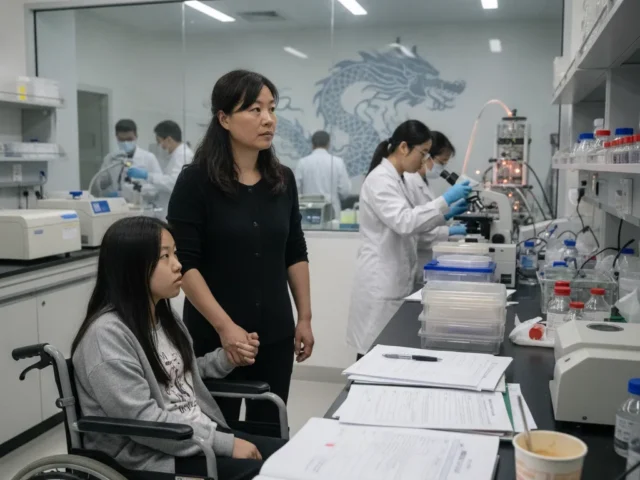
Here is the part that rarely makes the headline. A computer can suggest thousands of candidates in the time it takes a lab to test a few. Every candidate still has to be physically made, purified and measured. Does it fold? Does it stick to the target? Does it do the job in a living system?
The hard part is shifting from designing candidates to testing them fast enough. That explains why the field is so interested in automated labs, where robots run experiments around the clock and the results feed straight back into the models. The loop of design, build, test and learn only spins as fast as its slowest step, and that step is now physical.
There is a data problem too. Models learn mostly from successes that got published. Failed designs are enormously useful for training, but they tend to sit in lab notebooks. Groups that generate lots of clean experimental data, including the failures, may end up with an advantage no clever architecture can match.
Three reasons to stay calm
- Shape is not the whole story. Proteins move, change shape and work with partners. A single static structure is a snapshot of a dance.
- The body is harder than the bench. A candidate that works in a dish can fail in a person because of side effects, delivery or the immune system. AI shortens the start of drug development, while clinical trials still take as long as they take.
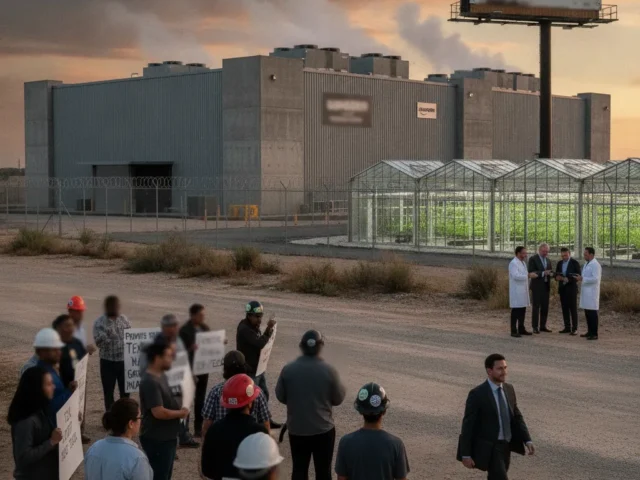
- Trials need care. Moving fast has real costs. Our recent story on the end of a fast lane for genetic medicine in China shows both sides of that trade-off.
What to watch
Skip the demo videos and look for three things: how many designs were tested in a real lab, what share of them worked, and whether the result was reproduced by an independent group. When those numbers start showing up in human trials, the story will have changed for good.
Sources
- The Royal Swedish Academy of Sciences: Nobel Prize in Chemistry 2024 press release
- Jumper et al., Highly accurate protein structure prediction with AlphaFold, Nature, 2021
- Watson et al., De novo design of protein structure and function with RFdiffusion, Nature, 2023
- Dauparas et al., Robust deep learning–based protein sequence design using ProteinMPNN, Science, 2022