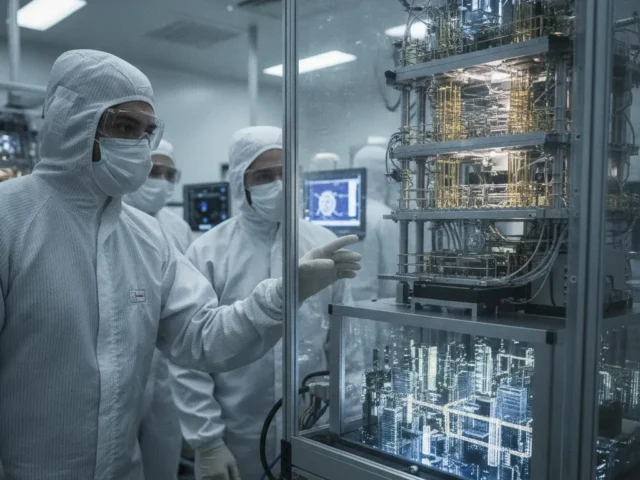
As the world becomes increasingly reliant on artificial intelligence, the massive amount of electricity required to power these systems has become a pressing concern. Current computer chips waste significant energy simply moving data back and forth between separate memory and processing units. Researchers at the University of Cambridge believe they have found a solution by looking toward nature, developing a new nanoelectronic device that mimics the efficiency of the human brain’s neural connections.
The team focused on creating a specialized version of hafnium oxide known as a memristor. Unlike traditional components, this device stores and processes information in the same location, potentially slashing energy use by up to seventy percent. While previous attempts at this technology relied on unpredictable conductive filaments that often failed or required too much voltage, the Cambridge team utilized a unique blend of strontium and titanium to create stable electronic gates. This allow the device to shift resistance smoothly and predictably, mirroring how biological synapses strengthen or weaken over time.
Lead author Dr Babak Bakhit noted that his discovery came after nearly three years of trial and error, finally clicking into place last November after he adjusted how oxygen was added during the fabrication process. In laboratory settings, these new devices operated with currents a million times lower than some conventional alternatives while maintaining remarkable consistency across thousands of cycles. These traits are essential for building hardware that does not just store binary bits but actually learns and adapts like a living organism.
Despite the breakthrough, a hurdle remains before this technology hits consumer electronics. The current production process requires temperatures around seven hundred degrees Celsius, which exceeds the limits of standard semiconductor manufacturing. Dr Bakhit is now focusing on lowering these temperatures to ensure the material can be integrated into commercial chips. If successful, this transition from rigid digital architecture to fluid neuromorphic computing could fundamentally change how AI operates globally.