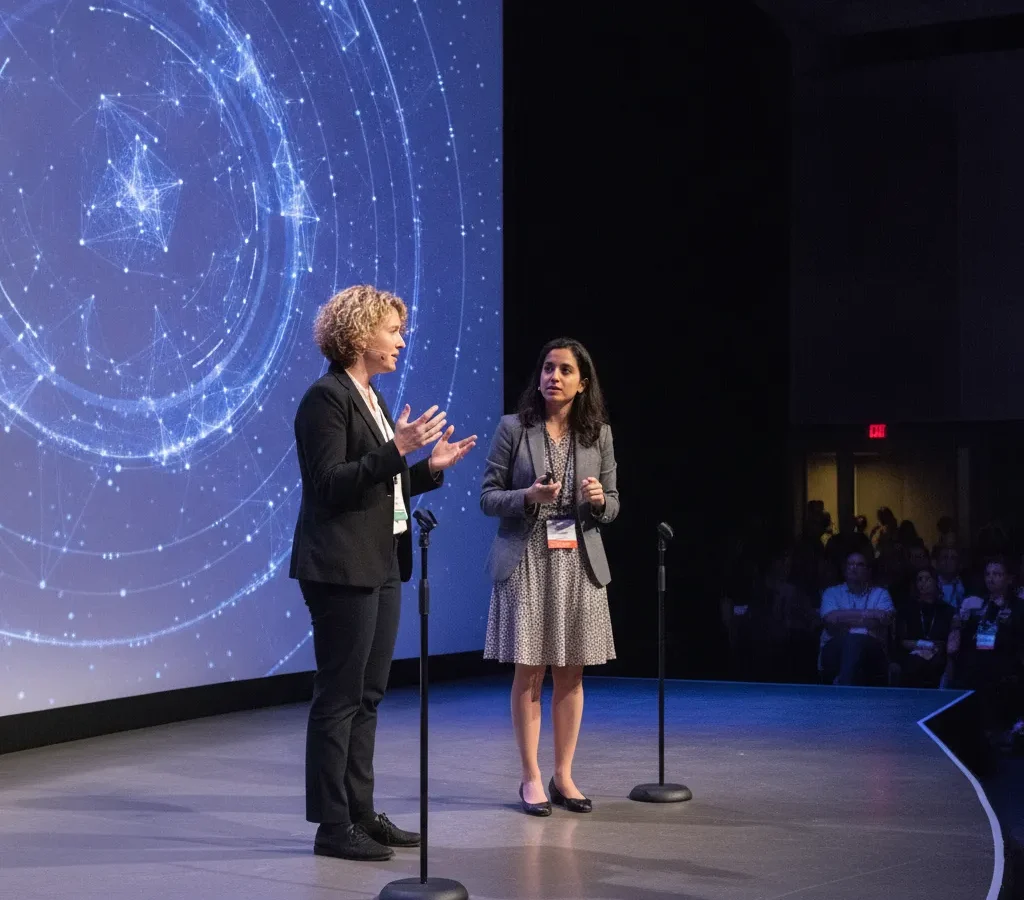
The global hunger for computing power is growing at a rate that threatens to outpace our physical ability to build infrastructure. Speaking at TechCrunch Disrupt, Ricursive Intelligence founders Anna Goldie and Azalia Mirhoseini warned that demand for compute could skyrocket tenfold thousand percent over the next five years. Rather than filling the horizon with endless rows of data centers that would block out the sun, Goldie and Mirhoseini argue that the solution lies not in building more factories, but in redesigning the silicon itself using artificial intelligence.
Their startup focuses on creating AI systems capable of designing chips, learning from every single iteration to refine and accelerate future versions. By automating the layout process, Ricursive aims to move away from traditional methods where engineers partition chips into small, manageable blocks. Instead, their technology optimizes the entire chip as a single entity. This shift has already led to surprising results, such as donut shaped component arrangements and wave like patterns that defy conventional engineering intuition but deliver superior performance.
Beyond mere efficiency, this transition promises to democratize custom hardware. Currently, the immense time and financial cost of designing a new chip means companies must be incredibly selective about what they produce. If that timeline can be slashed from several years down to a single week, specialized chips for augmented reality, biological computing, and space exploration suddenly become financially viable. It opens a door to hyper specific hardware tailored for niche applications that were previously too expensive to pursue.
While some observers express concern over machines designing their own brains, Goldie views this evolution as a liberation for human creativity. She suggests that while AI handles the grueling execution and technical optimization of chip architecture, humans are freed up to imagine higher level applications and explore new frontiers of computing. In her view, the future of innovation depends on a partnership where people provide the vision and AI provides the precision required to manifest it in silicon.